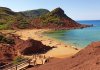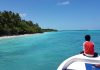

Would you like to swim near Slovakia in crystal clear water with a sandy beach without traveling all the way to distant Croatia? From Bratislava, it’s only a 3.5-hour drive to Upper Austria, a distance similar to the High Tatras. We are talking about Upper Austria and its perfect lakes with drinking water quality. Imagine an environment surrounded by mountains, family farms, and clean air. Furthermore, you can combine the lakes with a visit to Bavaria and its fairytale castles. That’s how we planned it too. We have prepared a summary of the best things you should definitely see and not miss on this Austrian-German road trip.
Detailed Google map with attractions

1. Town of Hallstatt
 The town of Hallstatt, listed in UNESCO, is one of the most romantic places in Europe and needs no special introduction. This Alpine town impressed the Chinese so much that they built an exact replica in 2012. You will pay approximately €10 for half-day parking at the beginning of the town. We then took a one-way cable car ride (€11) to the Skywalk viewpoint, offering unique views of the town, the lake, and the surrounding mountains. We ran down on a paved serpentine path, enjoying more views of the town and even passing by a waterfall. We arrive at the main square with the characteristic pointed church, the town’s landmark. If you have enough time, you can arrange a boat trip on Lake Hallstatt.TIP: Postcard view of the town is towards the Pfarrkirche Mariä Himmelfahrt church
2. Lake Attersee
 Lake Attersee has one of the cleanest waters in Austria, where we even talk about the quality of drinking water. It is approximately 20 km long, so there are many paid and unpaid places around. We have chosen the village of Unterach am Attersee, also known as the “little Venice” because of its Italian touch and Mediterranean villas. On our way back home, we also tried the second, more northern village Attersee am Attersee and the place Freibadeplatz Sprinzensteinpark. Both bathing spots were great, so we are convinced that the lake is beautiful from all sides.
TIP: Use the keyword “Öffentlicher Seezugang” to find free bathing spots.
3. Lake Wolfgangsee

As the name suggests, the lake was named in honor of Wolfgang Amadeus Mozart, who was born in the town of St. Gilgen. There are several swimming spots around the lake, both paid and unpaid. We tried a paid beach in the village of Strobl, which was definitely better than the unpaid spot Öffentlicher Badeplatz St. Wolfgang. It had a jetty with a gradual entry into the water, beautiful panoramic views of the mountains, and we lounged on the green grass. As a bonus, there was a floating pontoon on the water for sunbathing.
4. Eagle’s Nest (Kehlsteinhaus)

Hitler’s Eagle’s Nest, also known as Kehlsteinhaus or Eagle’s Nest, was built by his personal secretary Martin Bormann in 1937-1938 to celebrate Hitler’s 50th birthday. The decision to start World War II was made at this location. Eagle’s Nest is open for visitors from May to October. You need to park your car at a shared parking lot (€3) and then either take a bus or embark on a 3-hour hike uphill. Specially adapted buses depart from 8:30 am to 4:00 pm, overcoming an elevation of 770 meters and passing through five tunnels in 15 minutes. A round-trip ticket costs €28 and includes the elevator from the upper station. The golden elevator in the rock massif takes you another 124m up to a height of 1834m. Upon leaving the chalet, breathtaking views of the surrounding landscape and Lake Königssee unfold before you. You can continue hiking along the ridge based on the time you have available.TIP: On your way down to the bus, skip the elevator and take a walk down the winding path with magnificent views
5. Hohenschwangau Castle
 Approximately 3 hours’ drive from Eagle’s Nest, you will reach the fairytale Bavarian castles in the village of Schwangau. Tickets for both castles are purchased for a specific time either in advance online or can also be bought on-site. However, you should arrive right after the ticket office opens at eight o’clock, when they still have 200-500 tickets available. The yellow castle of Hohenschwangau was built first in 1855 and served as the official residence of the young Bavarian king Ludwig II. From there, the king then watched through a telescope the construction of his new castle Neuschwanstein. The best view of Hohenschwangau Castle, called Jugend, is located above Neuschwanstein Castle. From this panoramic viewpoint, you also have a clear view of the lakes Alpsee and Schwansee.
TIP: The most worthwhile option is the combined ticket Königsticket for both castles at 32€ per person (there is an additional 5€ fee for online purchase).
6. Neuschwanstein Castle

Disney’s castle really exists and you can find it in the village of Schwangau. The person who decided to build such a beauty in times when steam locomotives were already running was Ludwig II of Bavaria. Neuschwanstein is a castle built with the modern technologies of the 19th century and even back then it had central heating, hot water, and an elevator. Its chosen hilltop location is unique because the castle is visible from afar and often shrouded in mist, making it even more mysterious. The climb up the hill to the castle takes about 30 minutes on foot and continues to viewpoints of both castles. The best postcard view is from the Marienbrücke Bridge. The castle tour itself surprisingly only lasts 30 minutes, as the castle was never completed, so only a certain part of the castle is accessible. You will be guided through the interior and even receive a headset – languages available include German, English, and Czech. Photography is not allowed inside the castle.TIP: You will pay around 10€/day for parking near the castles, but there is also a free parking lot at Lake Schwansee, from where it is about 20 minutes walk extra